Getting to Know ‘Diamond Fluorescence’— How the Experts Evaluate Them
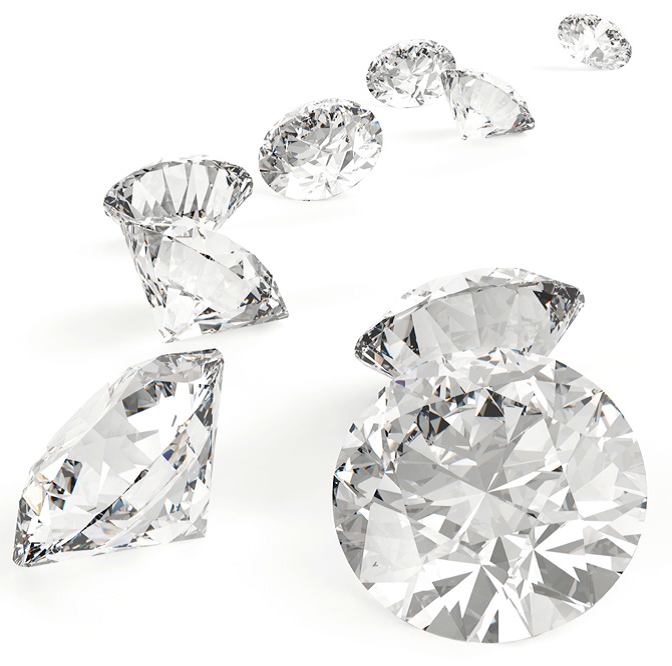
When spending money on a quality diamond, we tend to deliberate long and hard. Most buyers rely on the 4Cs framework — the internationally recognized grading standard set by the Gemological Institute of America (GIA) which evaluates a diamond's Carat (weight), Color, Clarity (the amount of inclusions), and Cut.
Learn more about the 4Cs
What are the 4Cs?
Diamond Color
Diamond Clarity
Diamond Carat Weight
Diamond Composition and Cut
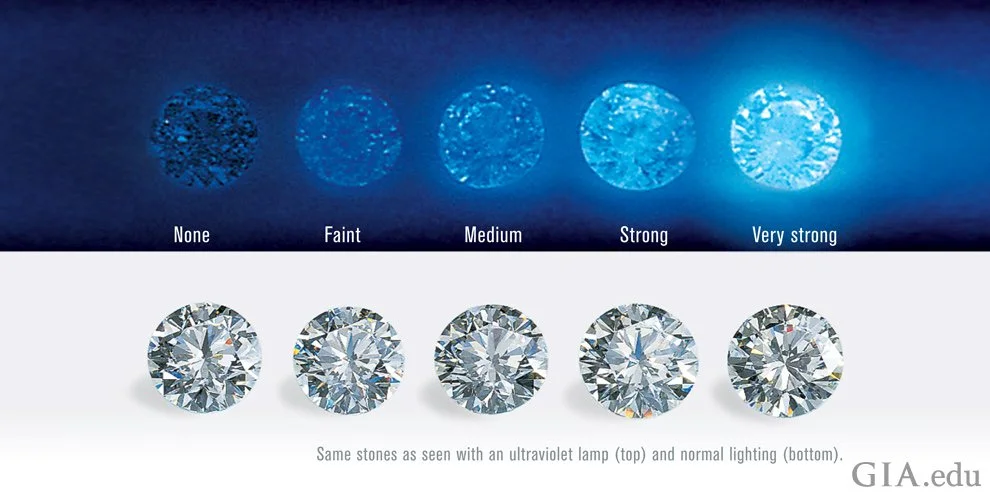
Beyond the 4Cs, there's another technique that seasoned diamond connoisseurs commonly use, checking whether a diamond has fluorescence.
Fluorescence refers to the blue glow emitted under UV backlight — the same kind of light used to detect counterfeit banknotes. Instead of checking fake bills, though, we shine it on a diamond to see how strongly it glows.
According to GIA standards, diamond fluorescence is graded on a five-level scale:
None — No fluorescence at all. When exposed to UV light, the diamond shows no reaction. (On an HRD certificate, this is listed as Fluorescence: Nil.)
Faint — Minimal fluorescence; a soft, faint blue glow.
Medium — Moderate fluorescence; a medium-strength blue glow with a slight haziness, though the diamond still appears largely transparent.
Strong — Clearly visible fluorescence; a strong blue glow with a noticeable cloudy or milky appearance.
Very Strong — Unmistakable fluorescence; an intense, vivid blue glow with an obvious cloudy, milky appearance.
How does fluorescence affect diamond pricing?
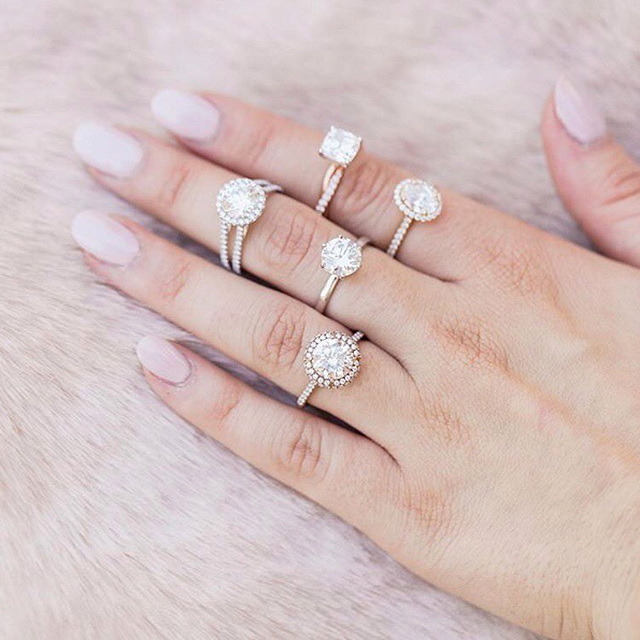
Depending on its intensity, fluorescence can reduce a diamond's price by anywhere from 2% to 20% compared to a stone with identical 4C specifications.
For lower color grades such as I, J, K, L, M, or N, fluorescence can actually work in your favor — the blue glow can counteract the yellow tint, making the diamond appear whiter than its actual grade. However, for high-color diamonds in the D, E, F, G, or H range, fluorescence is generally not recommended, as it can distort the stone's true color. This effect becomes especially pronounced in larger carat sizes.
One more fun fact: if you wear fluorescent diamond jewelry to an event with UV lighting, your piece will glow, which can certainly turn heads! That said, most diamond experts and investors tend to prefer stones with no fluorescence.
In Summary
There's no right or wrong answer when it comes to fluorescence — it ultimately comes down to personal preference and what gives the buyer peace of mind. What is certain, however, is that GIA has officially confirmed that fluorescence has no effect on a diamond's structural integrity or durability.
If you're searching for a quality diamond, we offer a direct-source diamond search platform — all in one place.